Chapter 2 · Video 3
Conflict, leadership, and credit
Print layout
Slide 1


Conflict, leadership, and who gets the credit
Slide 2
NIH Field Guide
Conflict can be both a resource and a challenge
Disagreement can expand thinking and add new knowledge
And stimulate new directions for research
Handled poorly, it impedes the team and stifles the science
Slide 3
Effective teams often make conflict more likely
They encourage critical reflection and constructive criticism
Conflict is a normal part of collaboration
Properly managed, it can lead to progress and cohesion
Slide 4
Scientific conflict can become interpersonal tension
Scientific disagreement can become interpersonal tension
Which impairs the team's ability to achieve its vision
Leaders mediate, but each of us owns our contribution
Slide 5
Three of the Field Guide's eight steps
Steps for managing and resolving conflict
In the moment
Actively listen
Confirm you understood what was said
Separate what matters from what's in the way
Underneath it
Look beneath the surface
Hidden fears, needs, histories, goals
The other five steps are in the book
Slide 6
NIH Field Guide
Self-awareness is a core skill for team science
It gives people greater control over their own reactions
Improves the quality of their interactions
And helps build other-awareness
Slide 7
Perspective-taking is a superpower in team science
Without self-awareness, you have few options for difficult colleagues
It matters most in teams built across backgrounds
Have the humility to listen and learn
Slide 8
NIH Field Guide
Leadership can be demonstrated by every team member
Not only the formal leaders
It elicits and capitalizes on the team members' strengths
Slide 9
You will learn from both kinds of leader
Effective
Encourage and motivate team members
Articulate a shared vision
Have difficult conversations
Ineffective
Disengaged or timid
Defensive or hostile
Slide 10
NIH Field Guide
The return on a good mentor goes past the recommendation letter
Exposure to new collaborations and resources
Ideas nurtured, and traps steered around
The hidden curriculum no classroom teaches
Slide 11
We work in teams, and we are evaluated as individuals
A tension at the heart of team science
Consider the Nobel Prize
Slide 12
Since 1901
Each prize goes to one laureate, or is shared by no more than three
Awarded most years on December 10 by the King of Sweden
In honor of Swedish inventor Alfred Nobel
Slide 13
Ivermectin and artemisinin have helped hundreds of millions of people.
2015: two discoveries, three laureates
Campbell and Ōmura: roundworm
Tu Youyou: malaria
Slide 14
Campbell, 2015 · Nobel Lecture
"So many of the people who made this discovery a success"
"My mind was instantly flooded with two emotions"
"One was a sense of joy and gratitude"
"The other was a feeling of sadness"
"...could not be named individually"
Slide 15
Recognition still depends largely on individual achievement
Despite the growing prevalence of team science
Which is why teams must plan ahead to share credit
Slide 16
In Closing
Decide authorship early, and in the open
Publication is one of the clearest records of achievement
When the leader decides alone, resentment and competition follow
Make a transparent plan as soon as possible
How members will contribute, be recognized, and share the credit
Conflict, leadership, and who gets the credit
Slide 1This video covers four more of the takeaways — conflict, self-awareness, leadership, and mentoring — and then the one that decides how a scientific career gets built: who gets the credit.
NIH Field Guide
Conflict can be both a resource and a challenge
Disagreement can expand thinking and add new knowledge
And stimulate new directions for research
Handled poorly, it impedes the team and stifles the science
Slide 2Conflict can be both a resource and a challenge. A resource, because disagreement can expand thinking, add new knowledge to a complex scientific problem, and stimulate new directions for research. A challenge, because if it is not handled skillfully, conflict impedes effective team functioning and stifles scientific advancement.
Effective teams often make conflict more likely
They encourage critical reflection and constructive criticism
Conflict is a normal part of collaboration
Properly managed, it can lead to progress and cohesion
Slide 3Here's a counterintuitive idea: conflict isn't always bad. In fact, effective teams often encourage the type of critical reflection and constructive criticism that makes conflict and disagreement more likely. This is because they know that conflict is a normal part of collaboration, and that when properly managed, it can lead to progress and cohesion.
Scientific conflict can become interpersonal tension
Scientific disagreement can become interpersonal tension
Which impairs the team's ability to achieve its vision
Leaders mediate, but each of us owns our contribution
Slide 4Of course, it's also true that scientific conflict and disagreement can lead to interpersonal conflict and tension that impairs the team's ability to achieve its vision. Team leaders play a large role in keeping debate productive and in mediating conflicts, but each of us is responsible for our own contributions to the collective dynamic.
Three of the Field Guide's eight steps
Steps for managing and resolving conflict
In the moment
Actively listen
Confirm you understood what was said
Separate what matters from what's in the way
Underneath it
Look beneath the surface
Hidden fears, needs, histories, goals
The other five steps are in the book
Slide 5The Field Guide recommends eight steps for managing and resolving conflict. Three of them are worth carrying into your next difficult meeting. Actively listen — assure others you have heard what they said, and ask questions to confirm your understanding. Separate what matters from what is in the way — get away from discussing who is right or wrong, and focus more on how to satisfy mutual needs. And look beneath the surface for hidden meaning, because hidden fears, needs, histories, or goals may be the underlying source of the problem. The other five are in the chapter.
NIH Field Guide
Self-awareness is a core skill for team science
It gives people greater control over their own reactions
Improves the quality of their interactions
And helps build other-awareness
Slide 6You won't find much about emotional intelligence in most research methods textbooks, but the ability to reflect and become self-aware is a core skill for team science. Self-awareness gives people greater control over their own emotional reactions to others, improves the quality of their interactions, and helps build other-awareness.
Perspective-taking is a superpower in team science
Without self-awareness, you have few options for difficult colleagues
It matters most in teams built across backgrounds
Have the humility to listen and learn
Slide 7Someone who lacks self-awareness has limited options for responding to challenging colleagues. People who can take someone else's perspective, and embrace what makes them different, have a superpower in team science. This is especially important in collaborations that bring together people from different backgrounds. Whether your work takes you to a new neighborhood or halfway around the world, it's critical to have the humility to listen and learn.
NIH Field Guide
Leadership can be demonstrated by every team member
Not only the formal leaders
It elicits and capitalizes on the team members' strengths
Slide 8Strong collaborative leadership elicits and capitalizes on the team members' strengths, and it is a critical component of team success. Leadership can be demonstrated by every team member, not just the formal leaders.
You will learn from both kinds of leader
Effective
Encourage and motivate team members
Articulate a shared vision
Have difficult conversations
Ineffective
Disengaged or timid
Defensive or hostile
Slide 9I've worked with many effective leaders throughout my career. Although they took different approaches, each possessed an ability to encourage and motivate team members, articulate a shared vision, and have difficult conversations. The ineffective leaders I've encountered were variously disengaged, timid, defensive, or hostile. You'll learn from both types. Every scientific collaboration you join as a trainee is an opportunity to observe and practice leadership, so take notes on what works and what doesn't.
NIH Field Guide
The return on a good mentor goes past the recommendation letter
Exposure to new collaborations and resources
Ideas nurtured, and traps steered around
The hidden curriculum no classroom teaches
Slide 10One of the best investments you can make as a trainee is in finding a good mentor, and the return should go far beyond leaving with a good letter of recommendation. Mentors can expose you to new collaborations and resources, help to nurture your ideas, steer you around traps, and teach you the hidden curriculum of your scientific discipline that you won't learn in the classroom. If you look at the scholarly record of successful scientists, you'll likely see the fingerprints of one or more helpful mentors.
We work in teams, and we are evaluated as individuals
A tension at the heart of team science
Consider the Nobel Prize
Slide 11Here's a tension at the heart of team science: we work in teams, but we're often evaluated as individuals. Consider the Nobel Prize.
Since 1901
Each prize goes to one laureate, or is shared by no more than three
Awarded most years on December 10 by the King of Sweden
In honor of Swedish inventor Alfred Nobel
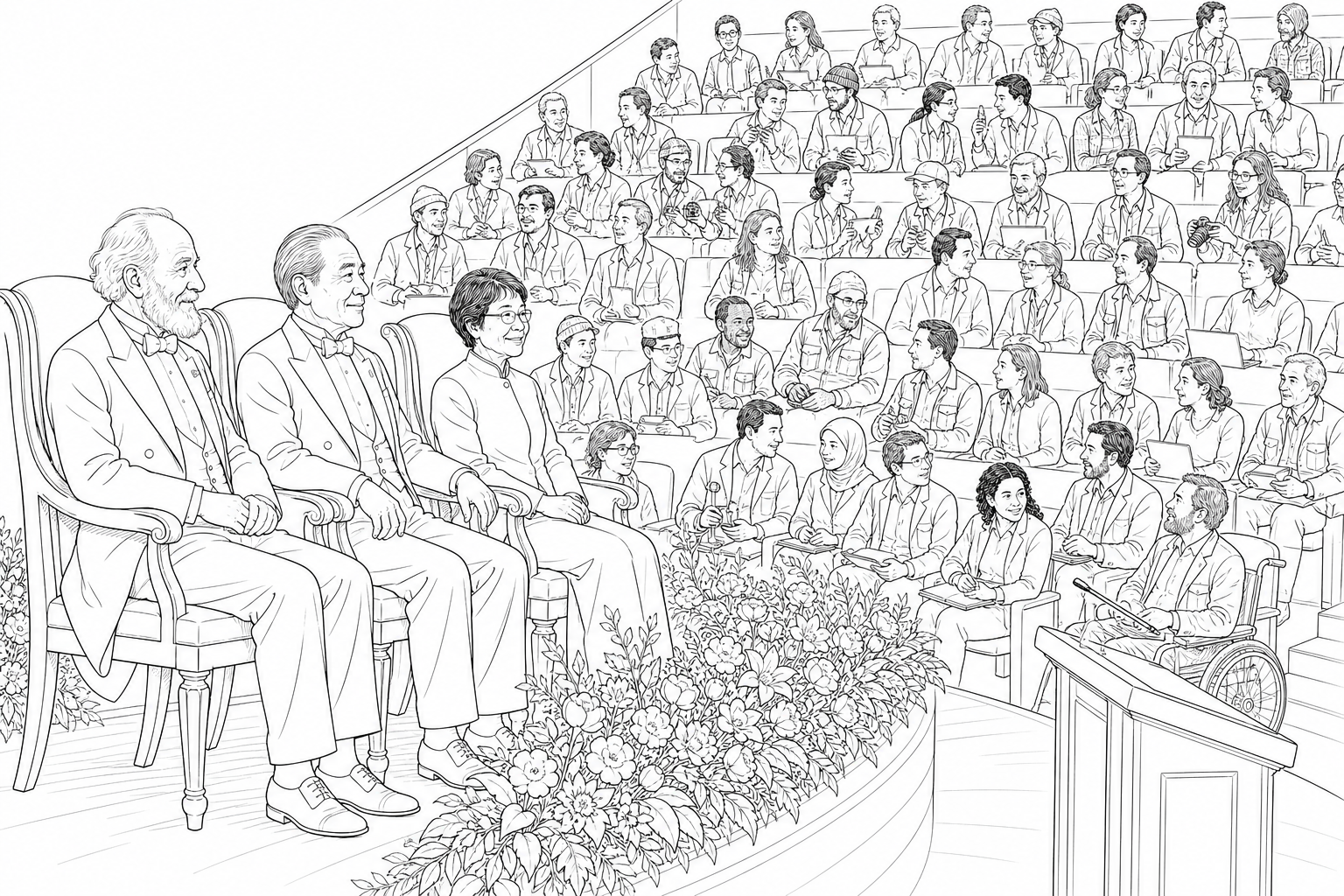
Slide 12Most years on December 10, going back to 1901, the King of Sweden awards several prizes in fields such as medicine, chemistry, and physics, in honor of Swedish inventor Alfred Nobel. Each prize can be given to a single laureate, or shared by no more than three.
Ivermectin and artemisinin have helped hundreds of millions of people.
2015: two discoveries, three laureates
Campbell and Ōmura: roundworm
Tu Youyou: malaria
Slide 13In 2015, the Nobel Prize in Physiology or Medicine was divided between three scientists in recognition of two discoveries that shaped treatments in global health. William Campbell and Satoshi Ōmura shared half of the prize for their discoveries concerning a novel therapy against infections caused by roundworm parasites, and Tu Youyou received the other half for her discoveries concerning a novel therapy against malaria. The importance of these discoveries cannot be overstated. Ivermectin and artemisinin have helped hundreds of millions of people. Tu Youyou even volunteered to be the first human to test her team's new drug.
Campbell, 2015 · Nobel Lecture
"So many of the people who made this discovery a success"
"My mind was instantly flooded with two emotions"
"One was a sense of joy and gratitude"
"The other was a feeling of sadness"
"...could not be named individually"
Slide 14That said, these individual awards don't recognize the teams behind the work. Campbell noted as much in his Nobel Lecture, taking a moment to graciously acknowledge his collaborators. He said his mind was instantly flooded with two emotions. One was a sense of joy and gratitude. The other was a feeling of sadness — sadness that so many of the people who made this discovery a success could not be named individually. He accepted, he said, as the representative of a research team.
Recognition still depends largely on individual achievement
Despite the growing prevalence of team science
Which is why teams must plan ahead to share credit
Slide 15Despite the growing prevalence of team science, professional recognition and career advancement still depend in large part on individual achievement. This is one reason that it is critical for teams to plan ahead to share recognition and credit.
In Closing
Decide authorship early, and in the open
Publication is one of the clearest records of achievement
When the leader decides alone, resentment and competition follow
Make a transparent plan as soon as possible
How members will contribute, be recognized, and share the credit
Slide 16One of the clearest records of achievement in science is academic publication, and decisions about who receives recognition as an author of a scientific paper can help to make or break careers. On some research teams, the leader decides who deserves to be an author with little to no input from more junior members. This has the potential to lead to resentment, and to create competition rather than collaboration. Team science advocates encourage a different approach: creating a transparent plan as soon as possible to identify how members will contribute, be recognized, and share the credit.