Chapter 13 · Video 1
When should we choose qualitative research?
Print layout
Slide 1


When should we choose qualitative research?
Slide 2
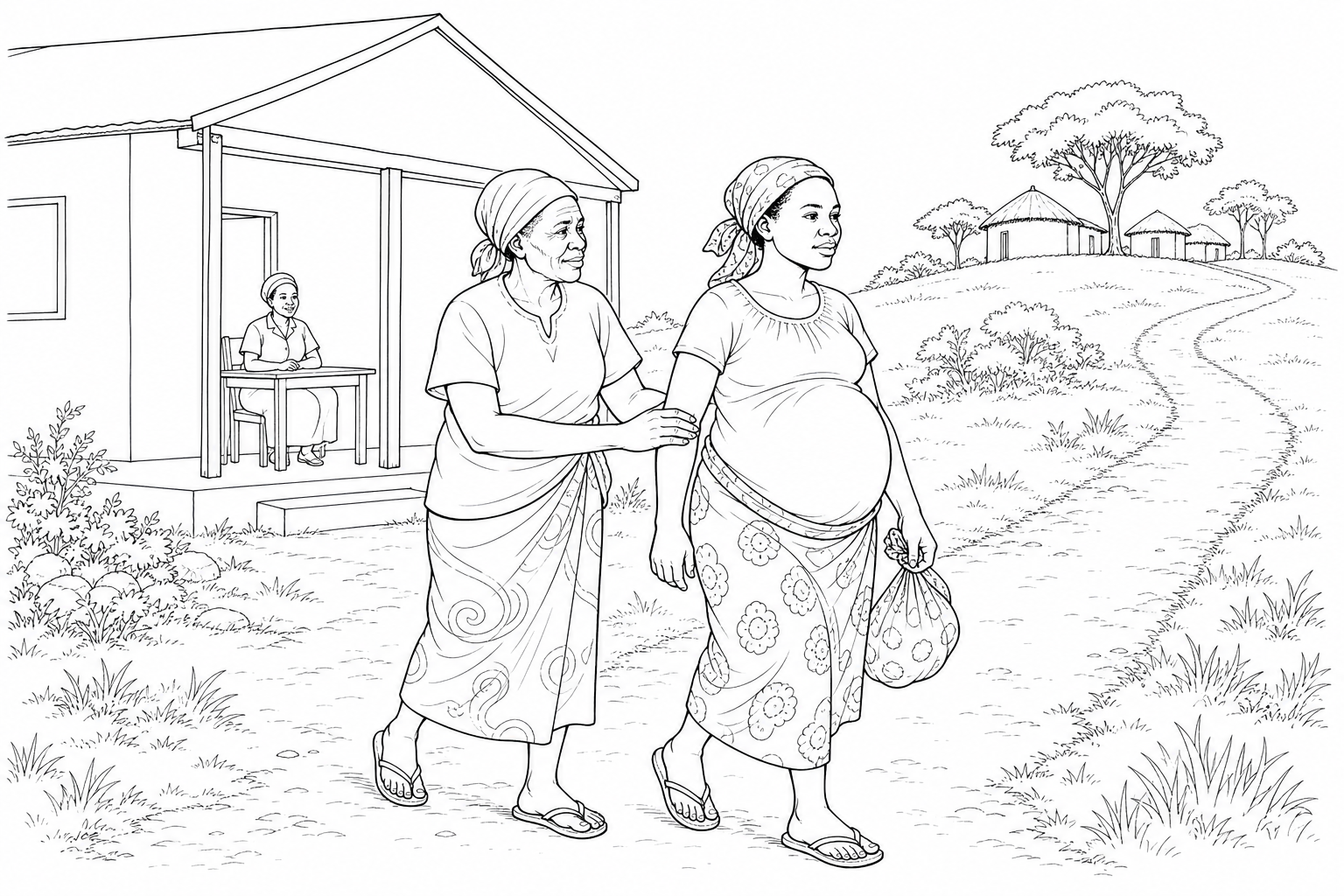
An illustrative scenario from the chapter, not a specific study.
A community health worker program with good numbers
A scenario
Rural Kenya
Slide 3
A scenario
Who is missing from those averages?
The poorest and most remote women are still missing
Some walk past the new clinic to a traditional birth attendant three villages away
The health workers aren't trusted: they don't speak the local dialect
Skilled attendance says nothing about a woman referred to a hospital her family could not afford
Slide 4
The gap between what we can count and what we need to understand
Numbers matter: does an intervention reduce mortality, does a program reach its beneficiaries?
Across cultures and complex social systems, numbers alone cannot capture the full story
We need approaches that illuminate how and why things work, or do not work
Slide 5
Two sets of assumptions about what research can know
Positivist
There is an objective reality
We can measure it, perhaps imperfectly
Typical of trials and survey analysis
Interpretive, constructivist
Reality is socially constructed
Multiple valid perspectives exist
Knowledge is co-created in the research
Slide 6
What reflexivity asks of the researcher
Acknowledge how your background and assumptions shape what you see and hear
Make your positionality and potential influence explicit
Slide 7
Characteristics that qualitative traditions share
Naturalistic settings
Inductive reasoning
Emergent design
A holistic perspective, and the researcher as instrument
Slide 8
In qualitative research, the researcher is the primary instrument
Quantitative research collects data with surveys, tests and diagnostic tools
Qualitative research works through your observations, questions and analytical choices
This makes training, reflexivity and quality processes crucial
Slide 9
Questions about how many, and questions about how and why
Quantitative question
What percentage attend four ANC visits?
Does task-shifting improve depression?
Qualitative question
What influences decisions to attend?
How are peer health workers perceived?
Slide 10
Who should deliver perinatal mental health support, and how?
One question about women in low-resource settings
Studied once with a discrete choice experiment
And once with interviews, focus groups and mapping
Slide 11
Kumar et al., 2023
A discrete choice experiment with pregnant adolescents in Nairobi
153 pregnant adolescents, ages 14 to 18, in informal settlements
10 choice tasks, each between two hypothetical treatment packages
Packages varied on 8 attributes, including delivery agent, sessions and setting
Slide 12
Kumar et al., 2023
Which features adolescents preferred when forced to choose
Facility nurses over community health volunteers (52.8%, β=6.04, p<0.001)
Eight sessions over four
Parenting-skills content over peer support
Adolescent-friendly services over clinics mixed with older mothers
Slide 13
Bhushan et al., 2026
Interviews, focus groups and mapping sessions in Lilongwe
42 participants: adolescents living with HIV experiencing depression, ages 13 to 19
Also caregivers, healthcare providers, and past lay-counseling participants
20 in-depth interviews, 3 focus groups, 10 social-support mapping sessions
Slide 14
Bhushan et al., 2026
Why adolescents trusted clinic-based providers
Trustworthy, youth-friendly, non-judgmental, able to keep confidences
"[At the clinic] there are people who studied the mind of a person…"
"…they subscribe to strict code of ethics so they can't be going about to people and expose you"
Slide 15
Bhushan et al., 2026
What the conversations surfaced that a forced choice would not
A minority wanted counselors who were themselves living with HIV
Preferences for session timing and frequency varied widely
Adolescents wanted frequent, flexible counseling; counselors pointed to workload and staffing
Slide 16
What we learn from each approach
Discrete choice experiment
Precise preference weights
A clear direction for program design
Can be analyzed by subgroup
Qualitative study
Why the choice is made
Dissent and exceptions
Operational tensions
Slide 17
In Closing
Qualitative research shows why and how a choice is constructed
It makes visible the dissent and exceptions a summary smooths over
And the operational tensions that matter for implementation
When should we choose qualitative research?
Slide 1This chapter is about qualitative and mixed methods research: what qualitative research is, when we should choose it, and how it can be combined with quantitative work.
An illustrative scenario from the chapter, not a specific study.
A community health worker program with good numbers
A scenario
Rural Kenya
Slide 2Here's a scenario you might find familiar. You're reading a research article about a community health worker program in rural Kenya, aimed at improving maternal health outcomes. The numbers look good. Clinic visits increased by 37 percent. Births with skilled attendants rose from 42 to 61 percent. Maternal mortality declined. Success, right?
A scenario
Who is missing from those averages?
The poorest and most remote women are still missing
Some walk past the new clinic to a traditional birth attendant three villages away
The health workers aren't trusted: they don't speak the local dialect
Skilled attendance says nothing about a woman referred to a hospital her family could not afford
Slide 3But then you visit that community. The gains are real, and they're also unevenly shared. The women still missing from those averages are the poorest and the most remote. Some walk past the new clinic to a traditional birth attendant three villages away, because the health workers aren't trusted: they don't speak the local dialect. And a rising rate of skilled attendance says nothing about the woman who reached the clinic, only to die after it referred her to a distant hospital her family couldn't afford. The numbers aren't wrong. They're incomplete.
The gap between what we can count and what we need to understand
Numbers matter: does an intervention reduce mortality, does a program reach its beneficiaries?
Across cultures and complex social systems, numbers alone cannot capture the full story
We need approaches that illuminate how and why things work, or do not work
Slide 4This gap between what we can count and what we need to understand drives the need for qualitative research in global health. Don't get me wrong: numbers matter enormously. We need to know if interventions reduce mortality and if programs reach their intended beneficiaries. But when we're working across cultures, within complex social systems, and with vulnerable populations, numbers alone can't capture the full story. We need approaches that can illuminate how and why things work, or don't work, and that can capture the lived experiences of the people our research is meant to serve.
Two sets of assumptions about what research can know
Positivist
There is an objective reality
We can measure it, perhaps imperfectly
Typical of trials and survey analysis
Interpretive, constructivist
Reality is socially constructed
Multiple valid perspectives exist
Knowledge is co-created in the research
Slide 5I promise to keep the philosophy brief, but it shapes everything from design to analysis to how we judge quality. Quantitative research generally operates within a positivist or post-positivist paradigm: there's an objective reality out there, and we can measure it, though perhaps imperfectly. When we conduct randomized controlled trials or analyze survey data, we're usually working within this paradigm. Qualitative research typically operates within interpretive or constructivist paradigms. Reality is socially constructed, meaning emerges through interaction and interpretation, and multiple valid perspectives exist on any phenomenon.
What reflexivity asks of the researcher
Acknowledge how your background and assumptions shape what you see and hear
Make your positionality and potential influence explicit
Slide 6What does this mean practically? In qualitative research we're not trying to eliminate our influence as researchers to achieve objectivity. We're trying to be reflexive about that influence, acknowledging how our own background, our assumptions, and our relationship with participants shape what we see and hear. Good qualitative research doesn't pretend the researcher is invisible. It makes the researcher's positionality explicit and thinks carefully about how it might affect the findings.
Characteristics that qualitative traditions share
Naturalistic settings
Inductive reasoning
Emergent design
A holistic perspective, and the researcher as instrument
Slide 7Qualitative traditions vary, but they share several characteristics. They study phenomena in natural settings. They reason inductively, building understanding from observations. They take a holistic perspective. And the design is emergent: it adapts as we learn. Maybe our first interviews reveal that a factor we didn't anticipate, say transportation costs, is crucial. Good qualitative design lets us adjust the interview guide to explore it more deeply in later interviews.
In qualitative research, the researcher is the primary instrument
Quantitative research collects data with surveys, tests and diagnostic tools
Qualitative research works through your observations, questions and analytical choices
This makes training, reflexivity and quality processes crucial
Slide 8The last characteristic is the one that matters most for what comes later in this chapter. In quantitative research, measurement instruments like surveys, tests, and diagnostic tools collect the data. In qualitative research, you are the primary instrument, working through your observations, your interview questions, and your analytical choices. That makes researcher training, reflexivity, and quality processes crucial.
Questions about how many, and questions about how and why
Quantitative question
What percentage attend four ANC visits?
Does task-shifting improve depression?
Qualitative question
What influences decisions to attend?
How are peer health workers perceived?
Slide 9With these foundations in mind, the practical question becomes: when should we choose qualitative research over, or in addition to, quantitative approaches? Qualitative research excels when we're asking how, why, or what does this mean, and not how many or how much. What percentage of pregnant women in rural Tanzania attend at least four antenatal care visits? That's a quantitative question. What factors influence pregnant women's decisions about whether to attend antenatal care in rural Tanzania, and how do they weigh competing demands on their time and resources? That's a qualitative question. Does task-shifting mental health counseling to peer health workers improve depression outcomes? How do patients and community members perceive peer health workers delivering mental health interventions? Both kinds of questions matter, but they require different approaches.
Who should deliver perinatal mental health support, and how?
One question about women in low-resource settings
Studied once with a discrete choice experiment
And once with interviews, focus groups and mapping
Slide 10To make this concrete, let's look at how quantitative and qualitative researchers have tackled the same question. How should perinatal mental health support be delivered to women in low-resource settings, and who should deliver it?
Kumar et al., 2023
A discrete choice experiment with pregnant adolescents in Nairobi
153 pregnant adolescents, ages 14 to 18, in informal settlements
10 choice tasks, each between two hypothetical treatment packages
Packages varied on 8 attributes, including delivery agent, sessions and setting
Slide 11The first team used a discrete choice experiment with 153 pregnant adolescents, ages 14 to 18, recruited from two primary healthcare facilities in Nairobi's informal settlements. Each participant completed 10 choice tasks, picking between two hypothetical depression treatment packages that varied across eight attributes. Rating features one at a time lets people endorse everything as important. Because each package bundled several features, choosing one meant giving up something in the other.
Kumar et al., 2023
Which features adolescents preferred when forced to choose
Facility nurses over community health volunteers (52.8%, β=6.04, p<0.001)
Eight sessions over four
Parenting-skills content over peer support
Adolescent-friendly services over clinics mixed with older mothers
Slide 12The modeled choices expose which features participants actually trade off for which. Adolescents preferred facility nurses over community health volunteers, eight sessions over four, parenting-skills content over peer support, and adolescent-friendly services over clinics mixed with older mothers. The number is precise, the direction is clear, and the finding plugs straight into program design.
Bhushan et al., 2026
Interviews, focus groups and mapping sessions in Lilongwe
42 participants: adolescents living with HIV experiencing depression, ages 13 to 19
Also caregivers, healthcare providers, and past lay-counseling participants
20 in-depth interviews, 3 focus groups, 10 social-support mapping sessions
Slide 13A second team asked a closely related question in Lilongwe, Malawi. They conducted 20 in-depth interviews, 3 focus group discussions, and 10 social-support mapping sessions with 42 participants: adolescents living with HIV who were experiencing depression, their caregivers, healthcare providers, and people who had delivered or received a similar lay-counseling intervention. Participants answered open-ended questions about where, when, how, and from whom adolescents would want counseling.
Bhushan et al., 2026
Why adolescents trusted clinic-based providers
Trustworthy, youth-friendly, non-judgmental, able to keep confidences
"[At the clinic] there are people who studied the mind of a person…"
"…they subscribe to strict code of ethics so they can't be going about to people and expose you"
Slide 14Across groups, participants converged on a small set of counselor qualities: trustworthy, youth-friendly, non-judgmental, and able to keep confidences. They clearly preferred healthcare providers over other community authority figures such as village chiefs or teachers. One adolescent explained the reasoning, and the slide shows it in their words. The institutional structure of the clinic, more than any individual attribute, made trust possible.
Bhushan et al., 2026
What the conversations surfaced that a forced choice would not
A minority wanted counselors who were themselves living with HIV
Preferences for session timing and frequency varied widely
Adolescents wanted frequent, flexible counseling; counselors pointed to workload and staffing
Slide 15But the same conversations surfaced things a forced-choice survey would not. A minority of adolescents wanted counselors who were themselves living with HIV, valuing lived experience over credentials. Preferences for session timing and frequency varied widely. And a structural tension emerged. Adolescents and caregivers wanted frequent, flexible, relational counseling, while counselors and implementers emphasized workload, staffing limits, and the need to maintain professional boundaries.
What we learn from each approach
Discrete choice experiment
Precise preference weights
A clear direction for program design
Can be analyzed by subgroup
Qualitative study
Why the choice is made
Dissent and exceptions
Operational tensions
Slide 16The two approaches point in the same broad direction, but we learn something different from each one. The discrete choice experiment gives us relative preference weights across many participants, and it can be analyzed at the subgroup level. The qualitative study's adolescents also preferred clinic-based providers, and from them we learn why: clinics are convenient, and the staff are generally competent and trained in how to maintain confidentiality.
In Closing
Qualitative research shows why and how a choice is constructed
It makes visible the dissent and exceptions a summary smooths over
And the operational tensions that matter for implementation
Slide 17This is what qualitative research uniquely offers: an understanding of why and how the choice is constructed, and visibility into the dissent, exceptions, and operational tensions that a quantitative summary smooths over.