Chapter 3 · Video 1
Where good ideas come from
Print layout
Slide 1


Where good ideas come from
Slide 2
"Tell me about your ideas"
One of the most anxiety-producing moments in student life
Why is an innocent prompt terrifying?
Maybe we have the wrong understanding of where good ideas come from
Slide 3
Johnson · *Where Good Ideas Come From*
Good ideas are usually not eureka moments
They are the product of fertile environments
Where ideas connect, fuse, and recombine over time
Slide 4
Two insights explain why this is hard for students
The slow hunch
The adjacent possible
Slide 5
The student timeline is hostile to innovation
Learning and assignments are compressed into semesters
Many ideas need more time to take shape
Slide 6
Johnson
Most great ideas first take shape in a partial, incomplete form
They have the seeds of something profound, but lack a key element
They start with a vague sense that there's an interesting solution
And they linger in the shadows of the mind, sometimes for decades
Slide 7
Your first idea is the start of your journey, not the end
Ideas take time to develop — this is the slow hunch
Your best ideas might not conform to this semester's schedule
And that's OK
Slide 8
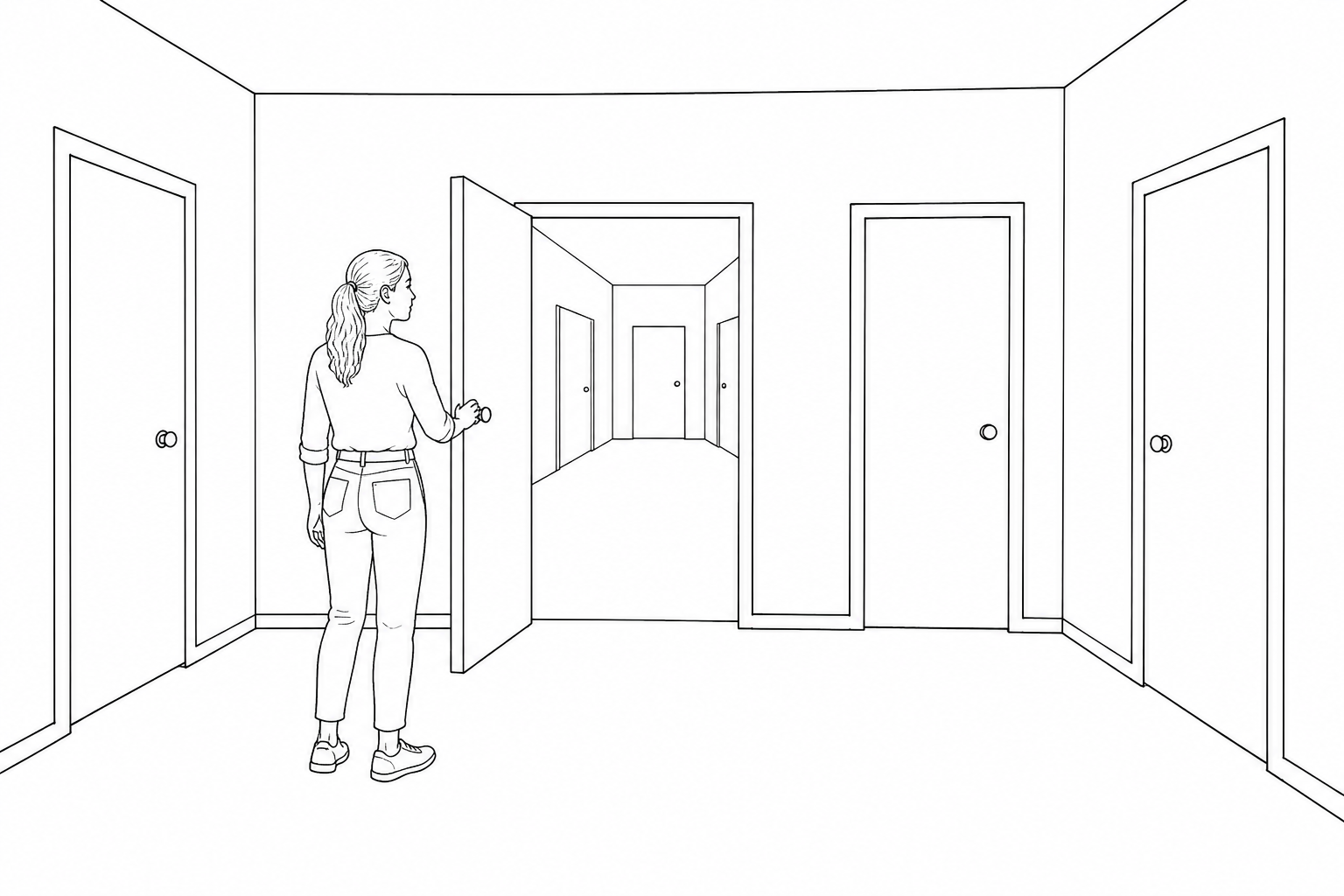
The adjacent possible. Johnson, Where Good Ideas Come From.
A house that expands with each door you open
Open one door, three appear
Keep going, build a palace
Slide 9
The first room is your understanding of a new topic
Barren because you are new — but full of potential doors
You open one by searching the literature, and by connecting with colleagues
Knowing which doors to walk through, and which to close, comes with practice
Slide 10
Johnson
One day your hunches are transformed into something more substantial
Jolted out by a newly discovered trove of information
Or by another hunch lingering in another mind
Or by an internal association that finally completes the thought
Slide 11
In Closing
This chapter will help you start opening doors
Finding a research problem worth studying
Describing, explaining, predicting — and asking a focused question
Next: so how do you start? Let's get practical
Where good ideas come from
Slide 1In my experience as a mentor, and as a one time student, one of the most anxiety-producing moments in student life is when a mentor says, tell me about your ideas.
"Tell me about your ideas"
One of the most anxiety-producing moments in student life
Why is an innocent prompt terrifying?
Maybe we have the wrong understanding of where good ideas come from
Slide 2Why is this innocent prompt terrifying? It might be because we have the wrong understanding of the origin of good ideas. So before we do anything practical in this chapter, I want to fix that understanding.
Johnson · *Where Good Ideas Come From*
Good ideas are usually not eureka moments
They are the product of fertile environments
Where ideas connect, fuse, and recombine over time
Slide 3In his book Where Do Good Ideas Come From, Steven Johnson argues that good ideas are usually not the eureka moments we tend to imagine. Instead, good ideas are the product of fertile environments, where ideas are allowed to connect, fuse, and recombine over time.
Two insights explain why this is hard for students
The slow hunch
The adjacent possible
Slide 4Two of Johnson's insights are relevant for us: the notion of the slow hunch, and the adjacent possible. These two concepts help to explain why generating research ideas can be hard, and why it can be especially hard for students.
The student timeline is hostile to innovation
Learning and assignments are compressed into semesters
Many ideas need more time to take shape
Slide 5First, the student timeline is often hostile to innovation. Learning and assignments are compressed into semesters, but many ideas need more time to take shape.
Johnson
Most great ideas first take shape in a partial, incomplete form
They have the seeds of something profound, but lack a key element
They start with a vague sense that there's an interesting solution
And they linger in the shadows of the mind, sometimes for decades
Slide 6As Johnson writes, most great ideas first take shape in a partial, incomplete form. They have the seeds of something profound, but they lack a key element that can turn the hunch into something truly powerful. They start with a vague, hard-to-describe sense that there's an interesting solution to a problem that hasn't yet been proposed, and they linger in the shadows of the mind, sometimes for decades, assembling new connections and gaining strength.
Your first idea is the start of your journey, not the end
Ideas take time to develop — this is the slow hunch
Your best ideas might not conform to this semester's schedule
And that's OK
Slide 7Ideas take time to develop. This is the slow hunch. But I have a research meeting with my mentor next Tuesday and she wants a list of ideas, you say. Breathe, don't panic. When you recognize that good ideas come from the accumulation of slow hunches, you'll learn to enjoy the process. Your first idea will be the start of your journey, not the end. Your best ideas might not conform to this semester's schedule, and that's OK.
The adjacent possible. Johnson, Where Good Ideas Come From.
A house that expands with each door you open
Open one door, three appear
Keep going, build a palace
Slide 8The second insight is related. We're always sitting on the edge of a breakthrough, but we need access to certain raw materials to unlock the discovery. This is the adjacent possible. Johnson describes it as a house that magically expands with each door you open. You begin in a room with four doors, each leading to a new room you haven't visited yet. Those four rooms are the adjacent possible. But once you open one of those doors and stroll into that room, three new doors appear, each leading to a brand-new room that you couldn't have reached from your original starting point. Keep opening new doors, and eventually you'll have built a palace.
The first room is your understanding of a new topic
Barren because you are new — but full of potential doors
You open one by searching the literature, and by connecting with colleagues
Knowing which doors to walk through, and which to close, comes with practice
Slide 9The first room is a metaphor for your initial understanding of a new topic. It's barren because you are new, but your room has many potential doors to open, many lines of research to explore. When you open one door by searching the literature, and by connecting with other colleagues at talks, conferences, and meet-ups, more doors appear. Figuring out which doors to walk through, and which ones to close, is a skill that comes with practice.
Johnson
One day your hunches are transformed into something more substantial
Jolted out by a newly discovered trove of information
Or by another hunch lingering in another mind
Or by an internal association that finally completes the thought
Slide 10Many literature searches lead to apparent dead ends. But with each door you open, new hunches form. And when you have opened enough doors, one day those hunches are transformed into something more substantial: sometimes jolted out by some newly discovered trove of information, or by another hunch lingering in another mind, or by an internal association that finally completes the thought.
In Closing
This chapter will help you start opening doors
Finding a research problem worth studying
Describing, explaining, predicting — and asking a focused question
Next: so how do you start? Let's get practical
Slide 11This chapter will help you start opening doors. We'll begin by finding a research problem worth studying, one that matters to you, contributes to your field, and benefits society. Then we'll explore the three main learning goals in research: describing what exists, explaining why and what if, and predicting what comes next. Armed with that foundation, you'll learn to craft focused research questions. And we'll close with hypotheses. So how do you start opening doors? Let's get practical.