Chapter 2 · Video 2
Whose vision gets funded
Print layout
Slide 1


Whose vision gets funded
Slide 2
NIH Field Guide
A strong and captivating vision attracts people to the team
It provides a foundation for achieving team goals
And a focal point a high-functioning team can coalesce around
Slide 3
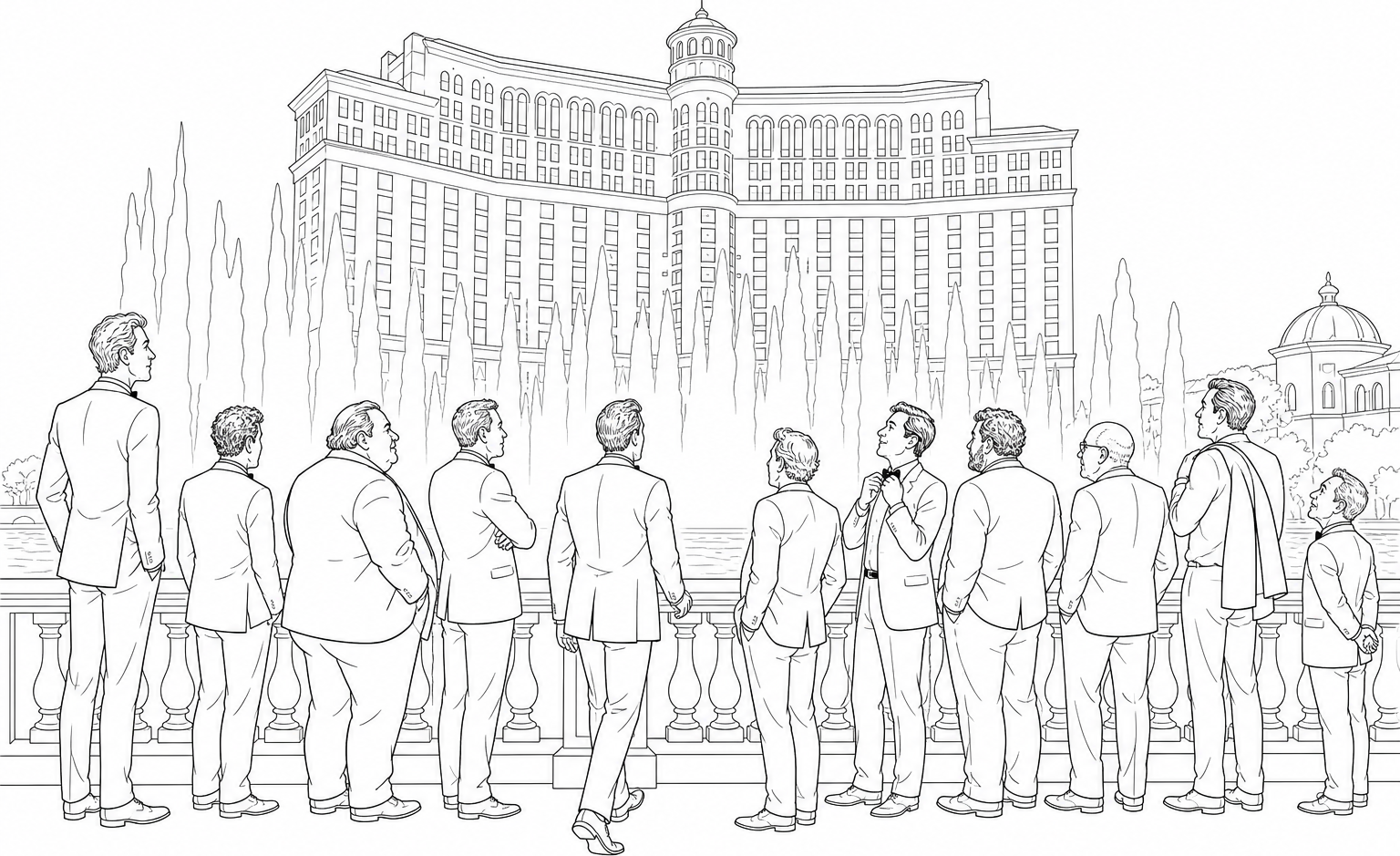
Ocean's Eleven (2001). The team was assembled first; the plan came after.
One vision, sold one person at a time
A hand-selected crew of nine
Get away with $150 million
Slide 4
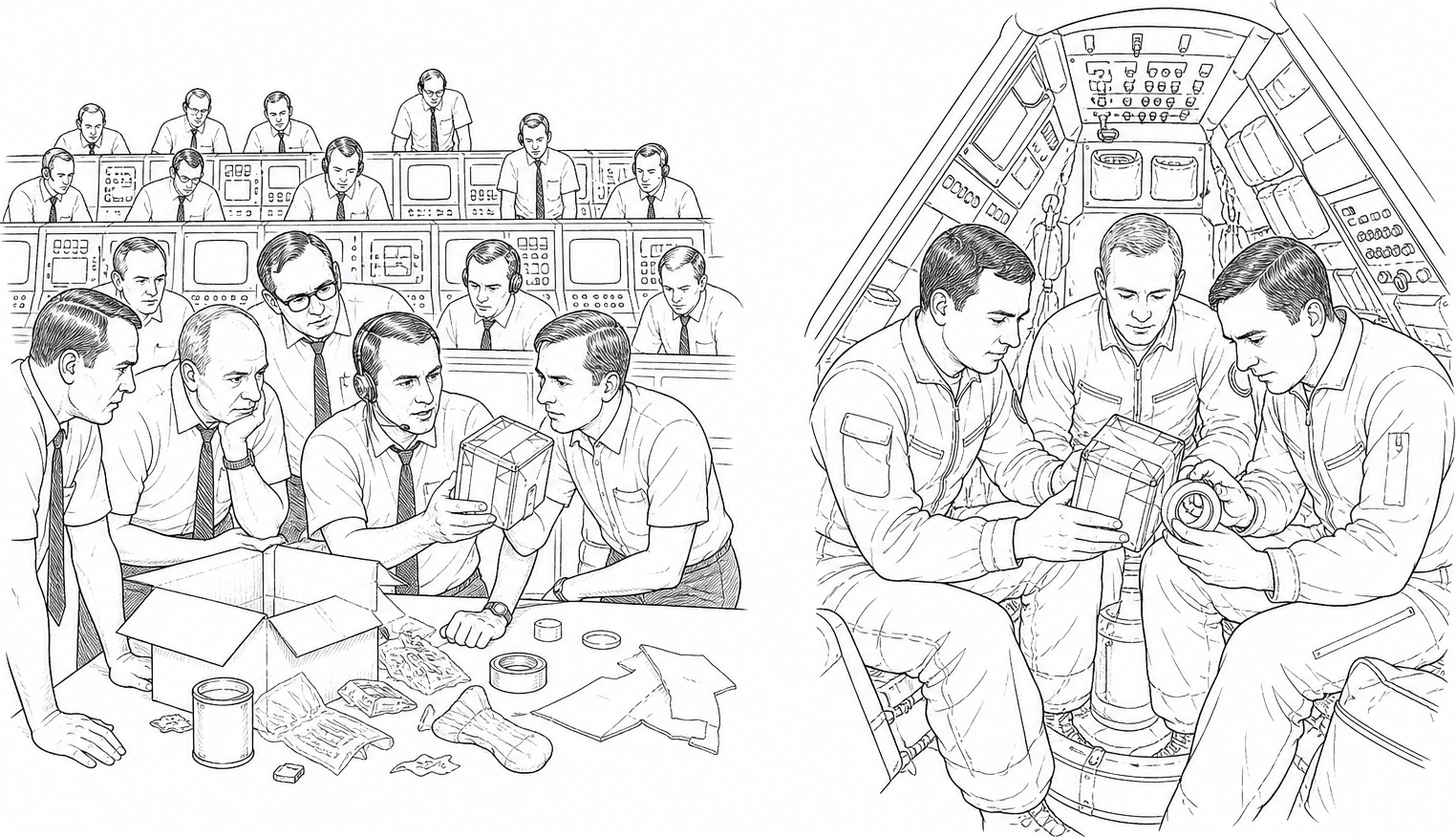
Apollo 13 (1995). The landing was aborted and the crew moved into the lunar module.
One vision, forged by a crisis
An explosion about 330,000 km from Earth
Oxygen venting into space
Ground and crew, working one problem
Slide 5
Both teams had a clearly defined and shared vision
Members understood their roles and how they contributed
Research on teams points to these factors for group cohesion
When members can't articulate the vision, the work often suffers
Slide 6
The stories differ in how the vision was created
Ocean's Eleven
The vision belonged to Danny Ocean
He made the case to each recruit
Top-down
Apollo 13
The team co-created the vision
Inside a collaboration already running
Bottom-up
Slide 7
In global health research, usually Ocean's Eleven
A principal investigator finds a funding opportunity
Writes a short concept note — the Specific Aims document
And invites collaborators to join the proposal
Slide 8
Whose vision becomes reality is driven by whose vision is funded
Funding decisions tend to favor scholars from the Global North
So visions of the Global South are underrepresented
Slide 9
One way to promote change is to build lasting collaborations
When collaborators continue to work together over time
Visions can come from anyone on the mission
Slide 10
Teams form and develop through stages
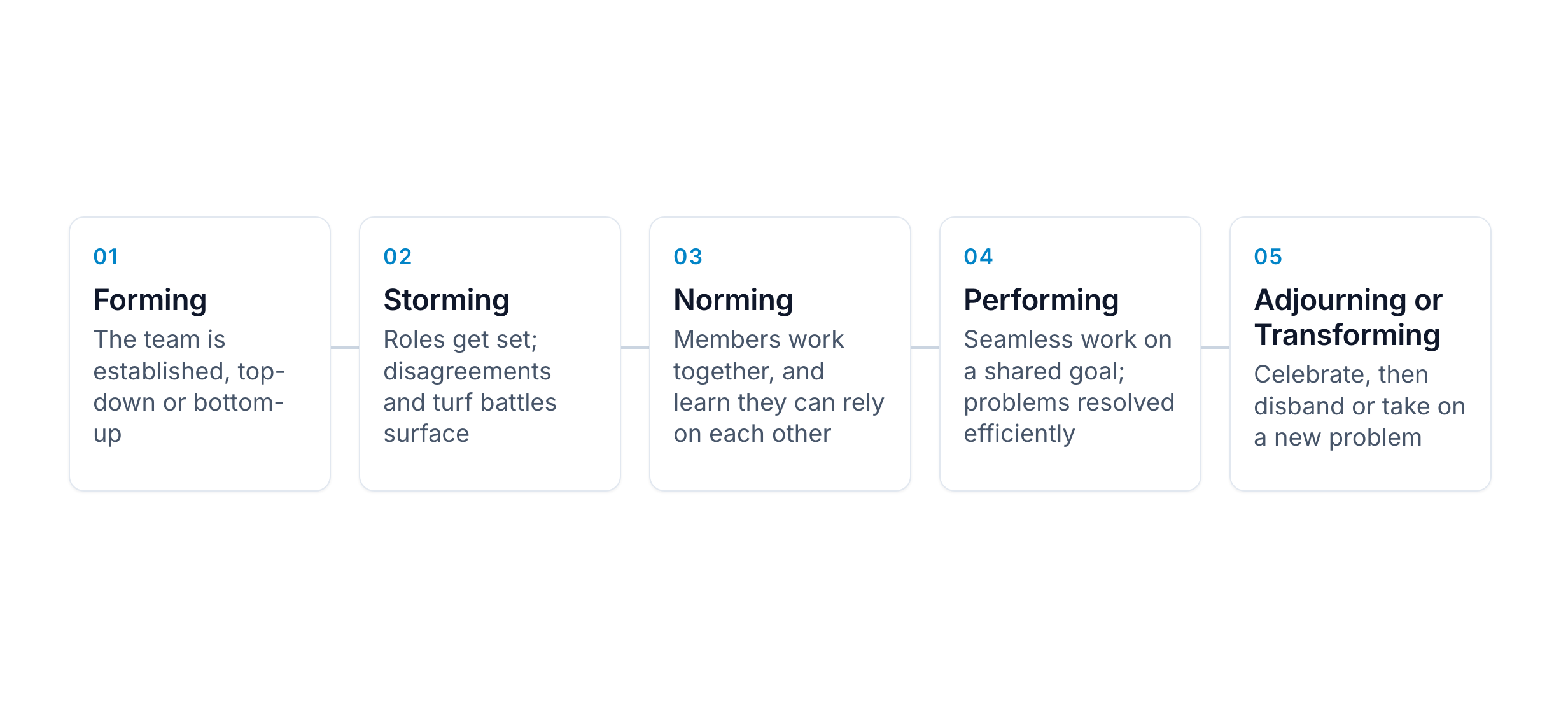
Tuckman's 1965 Model of Group Development, as described in the NIH Field Guide: Forming, Storming, Norming, Performing, and Adjourning or Transforming.
Slide 11
Stages one and two
Forming, then Storming
Forming
The team is established
Top-down or bottom-up
Storming
Roles and responsibilities get set
Disagreements and turf battles surface
Supported disagreement opens people up
Slide 12
Stages three, four, and five
Norming, Performing, and Adjourning or Transforming
Members work together effectively and learn to rely on each other
The team focuses on a shared goal and resolves problems efficiently
Then it celebrates, and disbands or takes on a new problem
Slide 13
NIH Field Guide
Trust doesn't appear automatically
Especially on new teams where people don't know each other
One approach is a written charter or collaboration agreement
How you work, resolve disputes, share workload, share credit
Most important when existing norms differ
Slide 14
Deeper trust is earned through actions
Identity-based trust builds on personal connections
And on a recognition of shared values
It should not be assumed
Slide 15
In Closing
Trust and communication are reciprocal
Teams that trust each other communicate openly
Interdisciplinary teams first need a shared vocabulary
Then the logistics: how often you meet, and in what format
When should a thread become a phone call?
Whose vision gets funded
Slide 1This video is about vision — what it does for a team, where it comes from, and why in global health the answer to that second question often concerns money.
NIH Field Guide
A strong and captivating vision attracts people to the team
It provides a foundation for achieving team goals
And a focal point a high-functioning team can coalesce around
Slide 2A strong and captivating vision attracts people to the team and provides a foundation for achieving team goals. A shared vision provides a focal point around which a highly functioning team can coalesce.
Ocean's Eleven (2001). The team was assembled first; the plan came after.
One vision, sold one person at a time
A hand-selected crew of nine
Get away with $150 million
Slide 3Some science collaborations are like the 2001 heist comedy, Ocean's Eleven. Danny Ocean, played by George Clooney, is released from prison and immediately begins recruiting a hand-selected, nine-member crew to rob three of the biggest casinos in Las Vegas. One by one, Ocean pitches them on the idea and secures their cooperation. His vision was simple: steal a hundred and fifty million dollars in cash without getting caught. Once the team was in place, they worked together to hatch a plan.
Apollo 13 (1995). The landing was aborted and the crew moved into the lunar module.
One vision, forged by a crisis
An explosion about 330,000 km from Earth
Oxygen venting into space
Ground and crew, working one problem
Slide 4Other collaborations are more like the 1995 film Apollo 13, about America's third crewed mission to the moon. Fifty-five minutes into the mission, when the spacecraft was about three hundred and thirty thousand kilometers from Earth, there was an explosion in the service module that caused oxygen to leak into space. The lunar landing was aborted, the three-man crew moved into the lunar module, and the team on the ground and the astronauts in space had to work together to find a way to return the spacecraft to Earth before they ran out of water and oxygen.
Both teams had a clearly defined and shared vision
Members understood their roles and how they contributed
Research on teams points to these factors for group cohesion
When members can't articulate the vision, the work often suffers
Slide 5In both movies, the teams had a clearly defined and shared vision. Team members understood their roles and how they were to contribute. Research on teams suggests that these factors are key to creating group cohesion. When team members can't articulate the vision, or don't understand how their contributions fit into the bigger picture, the team's work often suffers.
The stories differ in how the vision was created
Ocean's Eleven
The vision belonged to Danny Ocean
He made the case to each recruit
Top-down
Apollo 13
The team co-created the vision
Inside a collaboration already running
Bottom-up
Slide 6But the stories differed in one important way: how the vision was created. In Ocean's Eleven, the vision belonged to Danny Ocean, and he made a compelling case to prospective team members. In Apollo 13, the team co-created the vision in the context of an ongoing collaboration.
In global health research, usually Ocean's Eleven
A principal investigator finds a funding opportunity
Writes a short concept note — the Specific Aims document
And invites collaborators to join the proposal
Slide 7Which model is more common in global health research? Usually Ocean's Eleven. A lead scientist — the principal investigator — finds a funding opportunity, writes a short concept note, often called a Specific Aims document, and invites collaborators to join the proposal.
Whose vision becomes reality is driven by whose vision is funded
Funding decisions tend to favor scholars from the Global North
So visions of the Global South are underrepresented
Slide 8There is nothing inherently wrong with that model, but the opening of this chapter should lead us to reflect on the privilege in it. Namely, whose vision becomes reality in global health is driven by whose vision is funded. Funding decisions tend to favor scholars from the Global North, so visions of the Global South are underrepresented in global health research.
One way to promote change is to build lasting collaborations
When collaborators continue to work together over time
Visions can come from anyone on the mission
Slide 9One way we can promote change is to build lasting collaborations. When collaborators continue to work together over time, visions can come from anyone on the mission.
Teams form and develop through stages
Tuckman's 1965 Model of Group Development, as described in the NIH Field Guide: Forming, Storming, Norming, Performing, and Adjourning or Transforming.
Slide 10So how do teams get from assembled to effective? The most famous framework for understanding how teams evolve is Tuckman's 1965 Model of Group Development, and this is how the Field Guide describes it.
Stages one and two
Forming, then Storming
Forming
The team is established
Top-down or bottom-up
Storming
Roles and responsibilities get set
Disagreements and turf battles surface
Supported disagreement opens people up
Slide 11Forming is where the team is established, using either a top-down approach — Ocean's Eleven — or a bottom-up one, Apollo 13. Storming is where team members establish roles and responsibilities. That process may trigger disagreements or turf battles, and reveal a reluctance to appreciate the perspectives and contributions of people from different disciplines or training. But if collegial disagreement is supported, and premature pressure to consensus is resisted, people will begin to open up to one another.
Stages three, four, and five
Norming, Performing, and Adjourning or Transforming
Members work together effectively and learn to rely on each other
The team focuses on a shared goal and resolves problems efficiently
Then it celebrates, and disbands or takes on a new problem
Slide 12In Norming, team members begin to work together effectively and efficiently, start to develop trust and comfort with one another, and learn they can rely on each other. In Performing, the team works together seamlessly, focuses on a shared goal, and efficiently resolves problems that emerge. And in Adjourning or Transforming, once the team accomplishes its goal, it can celebrate the accomplishment and disband, or take on a new problem.
NIH Field Guide
Trust doesn't appear automatically
Especially on new teams where people don't know each other
One approach is a written charter or collaboration agreement
How you work, resolve disputes, share workload, share credit
Most important when existing norms differ
Slide 13It is almost impossible to imagine a successful collaboration without trust. But trust doesn't appear automatically, especially on new teams where people don't know each other. So how do you build it? One approach is to establish rules and norms from the start. It's common for teams to co-create a written charter or collaboration agreement that details how their members will work together, resolve disputes, share the workload, and share the credit. This practice is particularly important when teams bring together people from different backgrounds, disciplinary and otherwise, where the existing norms can differ.
Deeper trust is earned through actions
Identity-based trust builds on personal connections
And on a recognition of shared values
It should not be assumed
Slide 14With time and experience, teams can build deeper forms of identity-based trust, based on personal connections and a recognition of shared values. This type of trust is often earned through actions and should not be assumed. Creating and maintaining trust takes substantial effort.
In Closing
Trust and communication are reciprocal
Teams that trust each other communicate openly
Interdisciplinary teams first need a shared vocabulary
Then the logistics: how often you meet, and in what format
When should a thread become a phone call?
Slide 15Trust and communication are reciprocal. Teams that trust each other communicate openly, and open communication builds trust. But effective communication can be challenging for new interdisciplinary teams whose members may not share a vocabulary for the science, so successful teams make space for establishing common frameworks, including a shared vocabulary. That also means creating expectations around logistics. How often will you meet? What's the format, and how will you give everyone opportunities to be heard? What belongs in email versus a quick message? And when should a thread become a phone call?